The conviction of Winston aka “Winkie” Irvine for serious firearms offences raises profound questions about the sincerity of loyalist paramilitaries who claim to be committed to transitioning away from criminality.
The case also brings fresh focus to the different standards that apply in Northern Ireland in terms of our rule of law compared to other regions; the legitimacy that continues to be bestowed upon paramilitarism of all shades and the recurring problems of engagement without boundaries.
Let’s begin by highlighting why the this case undermines the credibility of those voices in loyalism who profess to be working towards transitioning and who indeed seek funding to do so.
Firstly, Winkie Irvine is a very senior loyalist who has been convicted of transporting guns. His seniority combined with the nature and seriousness of the offences are hammer blows to the credibility of his associates. He was no junior member on a solo run.
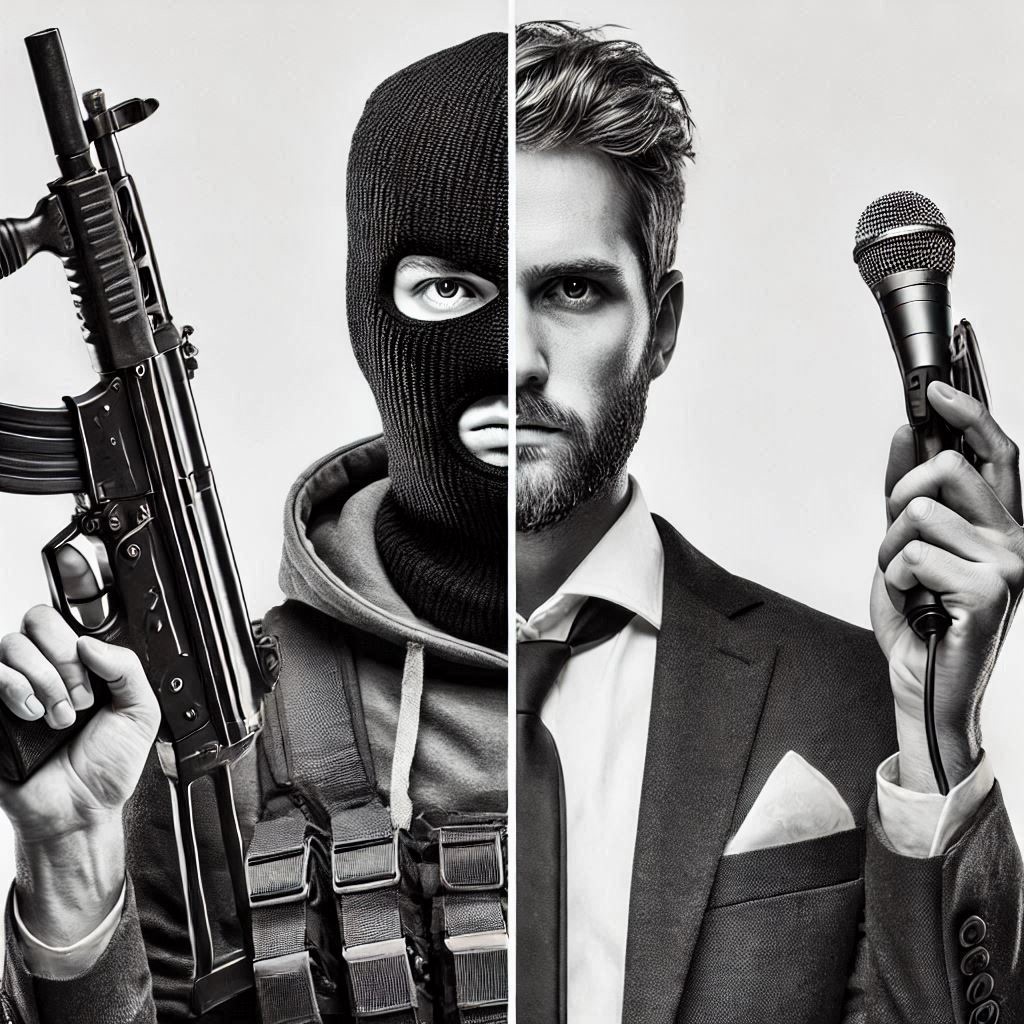
Secondly, not only was Irvine a very senior loyalist per se, but he was one of the most well known figureheads for conflict resolution and transitioning. In the most spectacular way he has been exposed as a forked tongue charlatan, talking peace by day (and getting paid for it) and being engaged in serious criminality by night. A huge number of people were hoodwinked by Winkie.
Thirdly, Irvine initially tried to use his very ‘work’ in conflict resolution as a defence to the criminal charges brought against him. He initially instructed his lawyers to argue that he was acting in his role as an established raconteur and had the audacity to try and enlist an Assistant Chief Constable from the PSNI to assist his spurious defence. By using his very public work in so called transformation as a defence to his criminal charge, he has discredited the integrity and legitimacy of such work.
The conviction of Irvine seems to have disturbed the naive trust many in civic society had in him. Academics, government officials, politicians and perhaps even people involved (past and present) in law enforcement, appear to have trusted him and were happy to endorse him, consult with him and even fund him.
Even after he was charged, it seems that some officials from the Irish government retained faith in Winkie as a man they could work with in future. Allison Morris indicated this on BBC Talkback on Monday, when we were on a panel discussing this case.
This on one hand is astonishing, but on another unsurprising. I’m not sure whether it is an example of what’s called the sunk cost fallacy (once you’ve invested so much in something it’s hard to walk away even when it is money down the drain) or a version of Stockholm syndrome.
I’m not surprised by the breathtaking naivety because it is a symptom of the entrenched indulgence of so called paramilitaries here in Northern Ireland. The loyalist ceasefire was 24 years ago and all their prisoners were released under the Belfast Agreement.
Yarns about transitioning of the UVF have been spun for a generation with no delivery. Counterproductively, the policy approach to achieving transitioning has been all carrot and no stick. And this is not because they are loyalists, the indulgence of all paramilitaries is sewn deeply into the fabric of the peace process.
Now let me be clear, risks and compromises were made for peace and some of these were placed transparently and democratically into the Belfast Agreement for people to vote on. Many did so and voted yes, some whilst holding their noses to prisoner releases. Others legitimately voted no.
However, the rot that set into our rule of law and the institutional indulgence of paramilitaries draws it lineage from the blind eyes turned to the men of violence and the secret concessions sought and delivered. None of these were transparent, nor voted for.
An acceptable level of violence was de facto government policy when invigilating on the ceasefires. PIRA could shoot a working class Catholic boy in the knees and the UVF likewise a Protestant and this was not a breach of the ceasefire (euphemistically ‘internal housekeeping’). However, an attack on ‘the other community” or the state was a different matter.
The signal this de facto government policy sent to the police, paramilitaries and civic society has scarred our rule of law and democratic norms.
Comfort letters to On the Runs (exclusively PIRA ones) were sought and granted and for some reason the PSNI helped operate this flawed scheme. The Prime Minister lobbied the Attorney – General to basically grant an amnesty to Rita O’Hare (at the behest of Sinn Fein leaders) on the basis it would be ‘good for the peace process’.
Now, there are risks to be taken for peace, they were taken, but the indulgence never stopped. It’s long past the point where we should have said, ‘that was then and this is now’.
The guardrails around the rule of law should have been pulled up and the independence of the various parts of the criminal justice system from political interference copper fastened. Indeed, such basic respect for due process and the rule of law is a necessary part of building a peaceful post conflict society, but old habits die hard
We learned this week that two senior PSNI officers were at a conference organised by Winkie Irvine, after he had been charged with serious firearms offences (Allison Morris Belfast Telegraph 12.12.2024).
This did not come as a major surprise to me, as I long felt (and highlighted publicly) that policing has often misjudged ethical engagement with shady characters.
I should say at the outset, I think the decision to attend the event was the wrong one and a number of critical factors lead me to this view.
Firstly, Irvine was a charged with serious crime and so the PPS prosecutorial test had been met. Secondly, the event was organised by Irvine, had he merely been an observer or participant that would be different. Thirdly, Irvine had already publicly tried to use his relationship with the PSNI in order to beat the charge he was facing. The PSNI should have been no were near this event.
At a deeper level, the PSNI’s attendance sent out a message that dilutes their corporate messaging on paramilitaries. Rightly, they appeal to communities to provide information and they try and strengthen community resilience to stand up to paramilitaries – part and parcel of this strategy is an attempt to de-legitimise paramilitaries.
The PSNI attendance did the very opposite, they provided a veneer of legitimacy and credibility to someone charged with serious offences connected to the UVF. If the PSNI recognise his standing despite being charged with serious crimes, what hope is there of persuading people who live amongst these people to see through their cloaks of authority.
I can say with absolute certainty – that I would not have attended such an event in these circumstances, nor would I permit any officer I commanded to attended. And before people think I am anti engagement, I led lots of innovative engagement for many years in places like Derry/Londonderry. However engagement without boundaries causes recurring problems, be it with politicians , community representatives or those linked to paramilitaries.
It is evident to me that it is long overdue that there are clear, written internal guidelines around police engagement, these would usefully provide clarity, consistency and ethical reference points for officers. These guidelines should also have a partner version for politicians to sign up to and be fleshed out in consultation with the Policing Board and DoJ.
Look at the problems around police-political engagement in recent years. The Bobby Storey funeral is a key example, where the nature of the engagement and the lack of any records (by senior police or elected politicians), were cited by the PPS as one reason why no prosecutions for breaching Covid Regs could take place.
The Ormeau Road debacle is an extreme version of where engagement between elected politicians (Sinn Fein) and senior police was off the Richter scale in terms of crossing boundaries. This incident caused a policing crisis that was unprecedented, the Storey debacle could have collapsed the Executive.
Yet have lessons been learned, have clear guidelines being drafted and agreed? Simple answer NO. Numerous times I have raised this but it appears the Policing Board, PSNI, DoJ nor anyone else for that matter wants to draft clear guidance. Yet, many will be quick to call for junior officer to be investigated if their own well intentioned engagement appears to cross a boundary (example – police engagement with Belfast Multicultural Association reported by BBC Spotlight).
Within the PSNI, was an internal memo circulated about after Irvine’s charge advising officers to seek guidance if he contacted them (he after all has a lot of officers mobile numbers).
After the Ormeau Rd case, huge work went into hard painstakingly exposes the political interference Was there any internal PSNI memo, training or guidance about political petitioning and boundaries? Did the Policing Board reinforce with their members that they mustn’t make demands to the police about operational matters? In Northern Ireland we live in denial about things and don’t learn lessons afterwards.
The Winkie case, from his elevated and often funded respectable position whilst still being an active within the UVF, through to the fact the great and the good attended his event after he was charged with serious offences, is symptomatic of a deeper malaise.
We still treat paramilitaries differently from other crime gangs, we write blank cheques instead of conditional ones, we fail to properly boundary engagement, we operate a policy of trust without verification in terms of undertakings made by paramilitaries and we send out mixed signals to communities who paramilitaries prey on.
Urgent action is required to re-assert our rule of law in Northern Ireland and to ensure that the ‘risks for peace’ of the past do not now simply become ingrained reflexes that perpetuate the grip paramilitaries have on some communities.
We must also ensure the guardrails are now pulled up around the operational independence of policing and eradicate the systemic and culture vulnerabilities to both political interference and police susceptibility to such influence.
Actions not words are required, in that vein I will conclude with 6 concrete recommendations. Thanks for reading.
Recommendations.
- Clear, written guidelines developed by PSNI for PSNI for community engagement, including ethics and record keeping.
- Clear, written guidelines for Policing Board members and elected representatives and PSNI officers on navigating engagement re operational matters (boundaries, record keeping etc).
- Clear and consistently messaging from the Executive and PSNI re paramilitarism, including an end to ambiguous language (‘pipe and slippers brigades) and even moving away from the phrase paramilitaries to organised crime gangs.
- All transitioning funding and support to be conditioned on a clear statement re ending all criminality and deliverable actions, timescales, end dates etc. The ability for the PSNI to report intelligence into decision makers of any such funding.
- Enforcement to continue in parallel, with emphasis on tangible of outcomes (asset stripping) and maximising visibility of enforcement (bringing media to enforcement operations etc).
- The Independent Reporting Commission scrapped. It serves no meaningful function, its last report couldn’t even name one of the groups it was supposed to be reporting on. It provides no meaningful output.

 Burrows Blog